Katie McGaha / San Jose State University / School of Library and Information Science / LIBR 265-10 / Prof. Beth Wrenn-Estes

Tuesday, May 17, 2011

47. The Christopher Killer by Alane Ferguson

The Christopher Killer by Alane Ferguson
ISBN: 0-670-06008-9
Viking, New York, 2006
274 p.

Plot Summary
Seventeen-year-old Cameryn Mahoney knows what she wants to do with her life and that is to become a forensic pathologist, just like her father.  Although her grandmother disapproves of the macabre subject matter, Cameryn constantly studies books on forensics, intrigued by the stories that corpses can tell.  When her father, Patrick, expresses his need for an assistant, Cameryn jumps at the chance to get some real experience and, after some convincing, her father agrees to hire her.  On her first case, Cameryn spots a bit of evidence that helps lead her father to determine that it was a natural death.  Believing that his daughter is a genius at noticing the small things, Patrick picks Cameryn up from school on his way out to examine a murder case.  However, they soon discover that the victim is her friend from work and, when conducting the autopsy, evidence shows that it was the work of a serial killer that leaves a St. Christopher medal on the victims.  Intent on finding the killer, Cameryn begins to realize that her snooping may cause her to be the next victim.

Critical Evaluation
The Christopher Killer by Alane Ferguson is such a gripping story that I could not put it down.  I have read reviews that compare it to an episode of CSI and that is exactly how it felt to me, as well.  Just as with the detective television shows, readers are taken on a journey along with the protagonist, sorting through the clues as Cameryn finds them and constantly reevaluating which character they believe is the killer.  The author incorporates many scientific facts in the novel, especially when writing the autopsy scene.  This helps to make the story more realistic and allows readers to accept parts of the storyline that are harder to believe.  I especially enjoyed the way Ferguson wrote the character of Cameryn.  Even though she is still a teenager, she is sure about what she wants to do for a living and she is not afraid to go after it.  Also, when she believes that something important is being overlooked in the case, Cameryn does not bow down to the intimidation that adults employ, instead trying her best to make herself heard.  However, her intelligence and strength do not mean that she is infallible and the mistakes that she makes throughout the novel solidify the realness of the character.  Because this is the first of four novels in the Forensic Mystery series, I am interested in how Cameryn’s character will grow in the following novels as she gains more confidence in her abilities and what types of cases she will be faced with next.

Reader's Annotation
Cameryn Mahoney wants to be a forensic pathologist more than anything and when she gets the opportunity to be the assistant to her father, the county coroner, she looks forward to the chance to get some real experience.  However, when one of her first cases is the murder of a friend, Cameryn must learn to separate her emotions from the facts if she wants to find the killer.

Information About the Author
Alane Ferguson was born in Cumberland, Maryland, in 1957.  She attended the University of Utah and Westminster College where she studied journalism.  Later, Alane became interested in writing for children, mostly, she says, to follow the example of her mother, successful author Gloria Skurzynski.  Her mother has written over fifty-seven books for children, while Alane is currently completing her thirty-second.  Alane and her mother co-authored a series for National Geographic.  Their novel, Wolf Stalker, was the first work of fiction National Geographic had published in its as of then 109-year history.  Wolf Stalker was nominated for the 1998 Mystery Writer's of America's Edgar Allan Poe Award and the newest and 13th book in the series, Night of the Black Bear, was launched in spring of 2007.  

A recipient of the 1990 Edgar Allan Poe Award as well as the Belgium's Children's Choice Award for her young adult novel Show Me the Evidence, Alane was also a nominee for her third young-adult mystery, Poison.  She received a 2007 Edgar nomination for her young adult novel, The Christopher Killer, the first in the Sleuth Forensic Mystery series.  Alane won the Children's Crown Classic Award for Cricket and the Crackerbox Kid, the American Bookseller's Association's "Pick of the List" for her picture book entitled That New Pet, and has been on numerous ALA Recommended Books for Reluctant Young Readers and Young Adult's Choice list. (information from author’s website: http://www.alaneferguson.com/About_Alane.html)

Genre
Young Adult – Mystery

Curriculum Ties
N/A

Booktalking Ideas
1. Address the author’s extensive research in forensics for the novel.
2. Focus on the relationship between Cameryn and her father.
3. Discuss the conflict Cameryn feels between science and belief in psychics such as Dr. Jewel.
4. Talk about the impact that her mother’s abandonment has had on Cameryn.

Reading Level/Interest Age
13+

Challenge Issues
The novel contains graphic descriptions of corpses and the steps in an autopsy, as well as violence.

When confronted with complaints about this novel, librarians should become familiar with the material and its content.  Turn to reviews from publications such as Publisher’s Weekly, School Library Journal, and Booklist, as well as reviews from teens that have read it.  Also, it is beneficial for librarians to present reasons backed by the ALA in support of intellectual freedom.  As stated in the Library Bill of Rights:
I. Books and other library resources should be provided for the interest, information, and enlightenment of all people of the community the library serves. Materials should not be excluded because of the origin, background, or views of those contributing to their creation.
II. Libraries should provide materials and information presenting all points of view on current and historical issues. Materials should not be proscribed or removed because of partisan or doctrinal disapproval.
III. Libraries should challenge censorship in the fulfillment of their responsibility to provide information and enlightenment.

Why Include Book in Selection? 
I first heard about this novel in the Author/Genre presentations for class and, when looking to add different genres to my collection, I decided to choose this novel.


46. New Super Mario Bros. Wii (Wii Video Game)

New Super Mario Bros. Wii (Wii Video Game)
Nintendo of America Inc., Redmond, WA, 2009

Summary
New Super Mario Bros. Wii is a video game for the Wii console that resembles an updated version of the original Super Mario Bros. games from the nineties.  The game allows for up to four players to play simultaneously, choosing from the characters of Mario, Luigi, and two Toad characters.  As with other Super Mario Bros. games, there is a storyline that drives players to complete levels and move forward on a map.  Bowser and his children have kidnapped Princess Peach and Mario and his friends must make it to Bowser’s castle to defeat him and free the princess.  While the main story mode has players completing levels to move forward on the map, there are also two dedicated multiplayer modes.  In the “Free-for-All” mode, players can choose to challenge each other on any course with the winner determined by the score, number of coins, and enemy kills.  For the other mode, “Coin Battle,” players race through the course, collecting coins along the way, and the player with the most coins wins.  To help players that are having a difficult time in single-player mode, the game has a “Super Guide” function that activates a computer-controlled Luigi to show a safe path to the end of the level.

Critical Evaluation
New Super Mario Bros. Wii is a fun game to play either in single-player mode or with a group of friends.  The game is challenging, keeping players interested as they try to complete the levels and move on to the next world.  It is extremely unique in that the game allows four players to play simultaneously, increasing the level of excitement as players help each other get past obstacles and defeat enemies.  One of the best parts is the ability to press a button and put your character in a bubble, letting your more skilled teammate get further into the level without slowing them down.  However, it can also be frustrating when players accidentally bump each other off of platforms, sending them falling below the screen to lose a life.  Nevertheless, when playing with two friends, I had a much better time than when I played in single-player mode as we all yelled and laughed together when faced with challenges.  With the hidden areas and secret bonuses, the game is one that players can go through several times over.  One drawback is that the game does not include online play, which is something that has become very popular for gaming teens.  Because the game is perfect for multiple players, it seems that it would only be natural for online play to be a part of it, but Nintendo did not include this option.  Overall, New Super Mario Bros. Wii is a challenging game that teens will find enjoyable to play solo, but the most fun will come when they enlist friends to use the multiplayer mode.

Reader's Annotation
Players encounter obstacles as they attempt to bring Mario and his friends to fight Bowser and save Princess Peach in this game for the Wii console.

Information About the Company
Nintendo first began with its release of the Nintendo Entertainment System.  Introduced in 1985, the NES was an instant hit. Over the course of the next two years, it almost single-handedly revitalized the video game industry. Selling over 60 million units, people brought games like Mario and Zelda into their homes for the first time on the NES.  The portable system, Game Boy, which came out in 1989, was closely associated with the classic game Tetris when it debuted. Game Boy is the most successful video game system ever released. Since its introduction in 1989, Game Boy has sold well over 150 million systems worldwide.

Building on the success of NES and Game Boy, Nintendo came out with several more upgrades, including Super NES, Nintendo 64, Nintendo GameCube, and the most recent Nintendo Wii.  In 2006, Nintendo introduced the Wii and with it several advanced, revolutionary features. Wireless motion-sensitive remote controllers, built-in Wi-Fi capability, and a host of other features have made the Wii the best-selling latest generation console system in the world. (information from company’s website: http://www.nintendo.com/corp/history.jsp)

Genre
Video Game – Platform/Adventure

Curriculum Ties
N/A

Booktalking Ideas
N/A

Reading Level/Interest Age
This game is rated for everyone.

Challenge Issues
I cannot think of any challenge issues that this game would have.

However, should complaints about this game arise, librarians should become familiar with the content on the video game.  Turn to reviews from video game magazines and on Amazon.com, as well as reviews from teens that have played it.  Also, it is beneficial for librarians to present reasons backed by the ALA in support of intellectual freedom.  As stated in the Library Bill of Rights:
I. Books and other library resources should be provided for the interest, information, and enlightenment of all people of the community the library serves. Materials should not be excluded because of the origin, background, or views of those contributing to their creation.
II. Libraries should provide materials and information presenting all points of view on current and historical issues. Materials should not be proscribed or removed because of partisan or doctrinal disapproval.
III. Libraries should challenge censorship in the fulfillment of their responsibility to provide information and enlightenment.

Why Include Game in Selection? 
I included this game because it is an update on a classic Nintendo game that has incredible graphics that teens will enjoy.

45. Michael Jackson: The Experience (Wii Video Game)

Michael Jackson: The Experience (Wii Video Game)
Ubisoft Entertainment, San Francisco, 2010
Licensed by Nintendo

Summary
Michael Jackson: The Experience is a dance video game for players of all levels, allowing for either individual play or group play for up to four people.  A challenge option is also available for dancers to take each other on one-to-one or two-to-two.  The game includes twenty-six of Michael Jackson’s most famous songs to dance to with the lyrics on the screen for players to sing along.  While holding the Wii remote, players follow the dancer on the screen, mimicking the movements of both the upper and lower body.  Several of the dance moves are reminiscent of moves that Michael made famous in his music videos and concerts.  Players are rated based on their ability to follow the rhythm of the song and hit the correct movements, as well as the energy they put into the dance.  There is also the option to practice the moves in Video Training mode, allowing players to learn the moves that they will face in the game. 

Critical Evaluation
Although it has been nearly two years since Michael Jackson passed away, his music and performances are still popular around the world.  With Michael Jackson: The Experience, players can learn the moves to some of his most famous routines and that is exactly what makes the game so fun to play.  The game is extremely user-friendly because of the different skill levels from which players can choose.  Also, the instructional videos are helpful in getting even the least coordinated people to gain a basic understanding of the moves.  In contrast to some other dance games, players cannot fail out of the round, allowing everyone the same chance to get through the level.  However, I had some issues with the remote not recognizing moves a few times, but that could be the fault of the Wii system.  Also, I can imagine getting tired of it after a couple of rounds with the inability to purchase more songs.  It would definitely be a blast to set up at a party or to borrow from a friend, but it seems to be more of a novelty item for fans of Michael Jackson.  However, this would make it an attractive game to include in a library collection because of the interest in trying the game out before investing in the high list price of $49.99.

Reader's Annotation
Michael Jackson: The Experience gives fans of the King of Pop the chance to dance along to his most famous routines.

Information About the Company
Ubisoft is a leading international developer, publisher, and distributor of interactive entertainment products.  Founded in 1986, the company is led by CEO Yves Guillemot and bases its headquarters out of Montreuil-sous-Bois, France.  As of the end of the 2009-2010 fiscal year, Ubisoft accomplished 1.038 billion euros in sales.

In addition to Michael Jackson: The Experience, Ubisoft has produced many video games over the years.  Some of the games have become the best-selling franchises worldwide, including Assassin’s Creed with 29 million units sold, Tom Clancy’s Rainbow Six with 23 million units sold, and Petz also with 23 million units sold.  (information from company’s website: http://www.ubisoftgroup.com/index.php?p=65&art_id=)

Genre
Video Game – Dance

Curriculum Ties
N/A

Booktalking Ideas
N/A

Reading Level/Interest Age
10+

Challenge Issues
The game asks players to copy one of Michael Jackson’s suggestive moves and Michael Jackson is a controversial figure in many areas.

When confronted with complaints about this game, librarians should become familiar with the content on the video game.  Turn to reviews from video game magazines and on Amazon.com, as well as reviews from teens that have played it.  Also, it is beneficial for librarians to present reasons backed by the ALA in support of intellectual freedom.  As stated in the Library Bill of Rights:
I. Books and other library resources should be provided for the interest, information, and enlightenment of all people of the community the library serves. Materials should not be excluded because of the origin, background, or views of those contributing to their creation.
II. Libraries should provide materials and information presenting all points of view on current and historical issues. Materials should not be proscribed or removed because of partisan or doctrinal disapproval.
III. Libraries should challenge censorship in the fulfillment of their responsibility to provide information and enlightenment.

Why Include Game in Selection? 
I have noticed that many teens enjoy playing dance games on game systems and, with the release of this game, it seemed that teens would be drawn to this one, as well.

Monday, May 16, 2011

44. That Summer by Sarah Dessen

That Summer by Sarah Dessen
ISBN: 978-0-14-240172-9
Speak, New York, 1996
198 p.

Plot Summary
Fifteen-year-old Haven has always felt a bit out of place.  Quickly approaching six-feet-tall, she towers over her petite mother and sister, as well as nearly everyone she meets.  For Haven, the summer is about to lead to even more alienation with her sportscaster father getting married to the weather girl that broke up her parents’ marriage and her sister, Ashley, getting married to boring Lewis Warsher.  Feeling abandoned by her father and constantly fighting with her sister, Haven longs for the days when her family was whole and happy.  When she runs into Ashley’s first love, Sumner Lee, Haven remembers the family vacation to the beach that Sumner came along on and the laughter that they all shared.  Everything was perfect until one Halloween night when Haven watched out her window as Ashley broke up with Sumner.  Soon, her father left the house for good and Ashley was no longer the sister that she knew.  Even worse, her best friend comes back from 4-H camp as a different person with a newly found confidence and a long distance boyfriend.  Feeling that no one understands her, Haven starts spending time with Sumner, hoping that he can help make everything right.

Critical Evaluation
Written in first person from Haven’s point-of-view, That Summer gives the reader a look into the mind of a teenager that is learning how to deal with all of the changes going on in her life, especially the changes that she wishes never happened.  The opening paragraph, as well as the title, reveals that Haven is looking back on the summer that stands out to her as the time when everything changed.  With her father’s remarriage to his mistress, her mother’s friendship with Lydia Catrell, and her sister’s upcoming nuptials, it is as if everyone is moving on without her.  This is all magnified when the one person she could count on, her best friend Casey, returns from camp changed, as well. Sarah Dessen was able to write the character of Haven as incredibly relatable.  Although I have not experienced what it feels like to deal with a broken home, I found myself pulling for Haven throughout the novel.  One scene in particular stands out to me; when Haven’s father sits in his car and honks the horn for her to come out to him, she sits just out of view, willing him to come up the walkway to the house and come get her.  After turning around in the driveway and honking a couple more times, he ultimately speeds off, leaving Haven with her dashed hopes.  His inability to walk up to the door broke my heart as I felt Haven’s pain over her father’s abandonment.  As the nice girl, Haven keeps everything inside, pushing it all down whenever she feels wronged.  The more that her sister patronizes her and her father dismisses her, the more I wanted her to speak up and get her feelings out.  However, when she finally releases her feelings, it seems more like she is having a tantrum and not really dealing with the issues, but simply blowing up at everyone.  Nevertheless, as a teenager resisting the changes before her, Haven cannot really be expected to know how to handle her feelings until she starts to mature and comes to terms with the truth about Ashley and Sumner’s breakup.  While That Summer may stand for the summer that Haven lost control of her life, it can also stand for the summer that Haven learned to adapt to change and recognize the people that are there for her no matter what.

Reader's Annotation
With both her father and sister having weddings, Haven’s summer has been taken over by weddings and she begins to feel alienated from her whole family.  When Sumner Lee returns to town, Haven finally has someone that understands her and listens.

Information About the Author
Sarah Dessen was born in 1970 in Illinois and grew up in Chapel Hill, NC.  Her parents were both professors at the University of North Carolina.  She’s been writing for as long as she can remember and got her love of reading from her parents.  When she was around eight years old, her parents gave her an old manual typewriter and a little desk to type up stories.  She attended college at UNC, where she studied creative writing and graduated with a degree in English, and then worked as a waitress, giving her time to write at night.  She sold her first book, That Summer, three years after graduating and has since published six more novels for young adults.

She finds a lot of inspiration for her novels from her group of girlfriends that she has had since high school, making it easier to put herself back into that mindset.  Also, she credits living in her hometown with giving her inspiration because she can bump into guys she had crushes on or people she had classes with while just running around town.  Although she did not intend on being a YA writer, she feels drawn to that part of her life and still has more memories to share.  Dessen recognizes the books she read as a teenager as the ones that had the most impact on her and, when she found a book that connected with what she was feeling, it stuck with her.  Although she has her good days and bad days writing, she still loves it and hopes that her books resonate with teens in the same way that the books she read as a teen did. (information from author’s website: http://sarahdessen.com/press-kit/#full-bio)

Genre
Young Adult – Chick Lit

Curriculum Ties
N/A

Booktalking Ideas
1. Focus on the relationship that Haven has with each of her family members.
2. Talk about Haven’s disappointment once her best friend returns from camp a changed person.
3. Identify what Sumner Lee represents for Haven.
4. Discuss the sense of isolation Haven feels with specific attention to her height and her place in the family.

Reading Level/Interest Age
12+

Challenge Issues
I do not believe that there are any potential challenge issues for this novel.

However, should complaints arise for this novel, librarians should become familiar with the material and its content.  Turn to reviews from publications such as Publisher’s Weekly, School Library Journal, and Booklist, as well as reviews from teens that have read it.  Also, it is beneficial for librarians to present reasons backed by the ALA in support of intellectual freedom.  As stated in the Library Bill of Rights:
I. Books and other library resources should be provided for the interest, information, and enlightenment of all people of the community the library serves. Materials should not be excluded because of the origin, background, or views of those contributing to their creation.
II. Libraries should provide materials and information presenting all points of view on current and historical issues. Materials should not be proscribed or removed because of partisan or doctrinal disapproval.
III. Libraries should challenge censorship in the fulfillment of their responsibility to provide information and enlightenment.

Why Include Book in Selection? 
I read a few Sarah Dessen books when I was younger and loved them, so I wanted to include one that I had not yet read for this project.

Sunday, May 15, 2011

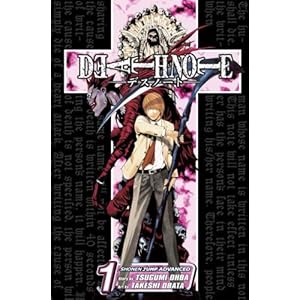
43. Death Note: Volume One by Tsugumi Ohba

Death Note: Vol. One by Tsugumi Ohba
ISBN: 978-1-4215-0168-0
SHUEISHA, Inc., Tokyo, 2003
200 p.

Plot Summary
Bored with his life in the Realm of the Shinigami, Ryuk drops his Death Note into the Human World, hoping that some human will entertain him once they find it.  Meanwhile, in the Human World, Light Yagami spots a notebook on the ground at school and it turns out to be Ryuk’s Death Note.  The rules included in the notebook state the owner call kill anyone by writing down their name and thinking of their face.  Also, if no cause of death is written down within forty seconds of writing the name, the person will die from a heart attack.  Five days after finding the Death Note, Light gets home from school to find Ryuk there waiting for him and he explains that the Death Note has sealed a bond between them.  Finally believing the power of the Death Note, Light initially feels hesitant about using it, but reasons that killing people that are evil would help humankind.  Feeling that he is the only person that has the guts to follow through, Light starts to cleanse the world of criminals.  The International Police Organization wonders about the increasing number of criminals dying from heart attacks and they enlist the help of the mysterious detective, L, to find the person responsible. 

Critical Evaluation
As one of twelve volumes, Death Note: Volume One is an exciting manga drawn in black and white that tells the story of a teenage boy from Japan that acquires a notebook that gives him the power to kill anyone as long as he knows their name and what they look like.  The story brings up several questions regarding the ethics of taking someone’s life.  Feeling power hungry, Light Yagami wants to use the weapon he has found, but he doesn’t want the guilt that comes along with killing.  He then decides that criminals and evil people are less worthy of living and pose a threat to humankind, so he selects a man that is holding up a nursery school to test out his weapon.  When the man dies from a heart attack, Light then tries it on a man that is bothering a woman in the street, writing that he will die from a crash and that happens, as well.  At first, Light starts to regret killing the two men and ponders throwing the notebook away.  Of course, his ego then kicks in and he believes that the Death Note will give him the ability to rid the world of evil.  This leads the reader to think of what he or she would do in the same situation.  Also, it raises the question of whether anonymously killing a criminal is actually beneficial to society.  One of the members of the International Police Organization points out that the crime rate has decreased since the killings started.  While there are certainly justifications for Light’s actions, the novel points out that murder is still murder, no matter the morality of the person targeted.  In addition, if one person is deciding what constitutes a moral person, there is an increased danger for the murders to extend beyond convicted criminals and start to include innocent people that have different beliefs from the owner of the notebook.  Overall, Death Note: Volume One is a fast-paced manga that leaves readers wanting more and it definitely makes me want to go out and get the second volume.

Reader's Annotation
Light Yagami finds the Death Note, a notebook that allows the owner to kill anyone by writing their name in the book and thinking of them.  Intent on riding the world of evil, Light makes it his mission to kill the criminals that threaten the safety of society.

Information About the Author
Tsugumi Ohba is a writer best known for the manga, Death Note.  Very little is known about the author aside from the short tidbits he includes at the beginning of each Death Note manga.  The facts state that he was born in Tokyo and collects teacups.  He also develops manga plots while holding his knees on a chair, similar to the habit of his character, L.  Ohba has released two manga series, Death Note and Bakuman, both illustrated by Takeshi Obata.

Based on the two authors’ similarities, some people believe that Tsugumi Ohba is a penname and his real name is Hiroshi Gamo, a manga writer known for his works at the magazine Weekly Shonen Jump.  However, the similarities between Gamo’s Tottemo! Luckman and Ohba’s Bakuman may merely be coincidental. (information from author’s Wikipedia: http://en.wikipedia.org/wiki/Tsugumi_Ohba)

Genre
Manga – Shonen/Action

Curriculum Ties
N/A

Booktalking Ideas
1. Discuss the debate that Light has over whether he should use the Death Note or not.
2. Focus on the impact that L has on Light’s actions.
3. Talk about the reason that Ryuk dropped his Death Note down to Earth.
4. Address the style of the illustrations used in the manga.

Reading Level/Interest Age
13+

Challenge Issues
This manga contains violent scenes.

When confronted with complaints about this novel, librarians should become familiar with the material and its content.  Turn to reviews from publications such as Publisher’s Weekly, School Library Journal, and Booklist, as well as reviews from teens that have read it.  Also, it is beneficial for librarians to present reasons backed by the ALA in support of intellectual freedom.  As stated in the Library Bill of Rights:
I. Books and other library resources should be provided for the interest, information, and enlightenment of all people of the community the library serves. Materials should not be excluded because of the origin, background, or views of those contributing to their creation.
II. Libraries should provide materials and information presenting all points of view on current and historical issues. Materials should not be proscribed or removed because of partisan or doctrinal disapproval.
III. Libraries should challenge censorship in the fulfillment of their responsibility to provide information and enlightenment.

Why Include Book in Selection? 
I wanted to include a manga to help diversify my collection and this one was recommended a lot in the chat area during our Author/Genre presentations.

42. Blood and Chocolate by Annette Curtis Klause

Blood and Chocolate by Annette Curtis Klause
ISBN: 978-0-385-90434-4
Delacorte Press, New York, 1997
264 p.

Plot Summary
Vivian Gandillon is a teenage werewolf, able to walk amongst humans unnoticed during the day and then undergo the change to run free at night.  She lost her father, who was also the pack’s leader, in a fire after the townspeople connected the pack to a couple of murders in town and suspected them of being werewolves, setting a house ablaze.  After this discovery, the pack moved from West Virginia to a suburb in Maryland, hoping to start anew.  However, acts of rebellion signaled that it was time to pick a new leader through the Ordeal, a tradition in which members of the pack fight until there is only one left, earning the title of leader.  Because of the part some of the pack played in leading to her father’s death, Vivian wants less and less to do with them, rejecting any of the advances they send her way.  At the same time, she meets a human or “meat-boy,” Aiden, who shows interest in paranormal elements, including werewolves.  Embracing his sensitive nature, Vivian begins to fall for him despite the warnings of her mother and she wonders if she should reveal her true self to him, believing that he will accept the magic of it all.  However, when a murder puts the pack in danger of being exposed, Vivian must decide which world she really belongs in.

Critical Evaluation
With Blood and Chocolate, Annette Curtis Klause depicts a magical world in which werewolves live amongst humans, but resist forming any friendships with them.  She is also able to create wonderful characters with many different personalities and depth to them, particularly with regard to Vivian, Esme, and Gabriel.  As the protagonist of the novel, Vivian is the character with which the reader becomes the most involved.  Scarred by her father’s death, Vivian no longer feels the closeness to the pack that she once did, but she still does not reject her own existence as a werewolf, reveling in the sweet feelings that the change brings her.  Once she gets close to Aiden, she starts to pull even further away from the pack, wanting her independence to do as she pleases.  Even though members of the pack voice their disapproval, she fights back against them.  She also puts herself at risk, both physically and emotionally, by considering whether she should show Aiden her other side, trusting him to love her as she is.  In contrast to many of the weaker female characters in recent teen paranormal romance literature, Vivian is a strong female that does not let anyone rule her.  With the character of Esme, the reader is introduced to her as a female member of the pack that is constantly looking for companionship with younger males.  As Vivian’s mother, she does not seem to harbor the same pain about her husband’s death as Vivian does.  However, the reader sees the sensitive side of her when Vivian finds her mother in the living room with pictures of her husband strewn about around her.  My favorite character in the novel is Gabriel; though intimidating and sometimes scary, he bares his softer side at the end of the novel, suggesting that his powerful demeanor is more for show than reflective of his personality.  Overall, I found the novel extremely entertaining and sometimes suspenseful with Klause’s character development being the strongest asset.

Reader's Annotation
Sixteen-year-old Vivian is torn between her connection to her fellow werewolves and her love for a human.  When the secrecy of the pack is threatened, Vivian must pick to which side she belongs.

Information About the Author
Annette Curtis Klause was born in 1953 in Bristol, England.  She moved to Maryland prior to earning her Bachelors in English literature and Masters in Library Science from the University of Maryland.  She continues to work at a library, currently as a children’s materials selector in Maryland.  Since 1990, Klause has published four young adult novels, including Blood and Chocolate.

She did not really learn about the existence of young adult literature until she was in library school.  Realizing that there were books that she would have loved as a teenager, Klause wanted to contribute to the effort and cover even more issues.  Klause states, “When I started to write seriously for teenagers I wrote what I would have enjoyed when growing up but couldn't find, and I didn't worry about how scary or sexy I made my stories.  I wasn't going to let myself be hobbled by an exterior censor. I wrote what that story needed and I would see what I could get away with later.  As it turned out, the things I loved as a teenager are still enjoyed by teenagers now, and my editors have been very supportive of the way I have written about these things, so my instincts were right.” (information from author’s Wikipedia: http://en.wikipedia.org/wiki/Annette_Curtis_Klause and quote from author interview with Ravenstone Press: http://www.ravenstonepress.com/klause.html)

Genre
Young Adult – Paranormal Romance/Dark Fantasy

Curriculum Ties
N/A

Booktalking Ideas
1. Discuss the negative feelings that Vivian has toward the Five.
2. Focus on the relationship between Vivian and Aiden.
3. Identify the differences that Vivian has from the other single female werewolves.
4. Tell about the sense of belonging that Vivian craves.

Reading Level/Interest Age
14+

Challenge Issues
The novel includes sexual situations and some graphic descriptions of violence.

When confronted with complaints about this novel, librarians should become familiar with the material and its content.  Turn to reviews from publications such as Publisher’s Weekly, School Library Journal, and Booklist, as well as reviews from teens that have read it.  Also, it is beneficial for librarians to present reasons backed by the ALA in support of intellectual freedom.  As stated in the Library Bill of Rights:
I. Books and other library resources should be provided for the interest, information, and enlightenment of all people of the community the library serves. Materials should not be excluded because of the origin, background, or views of those contributing to their creation.
II. Libraries should provide materials and information presenting all points of view on current and historical issues. Materials should not be proscribed or removed because of partisan or doctrinal disapproval.
III. Libraries should challenge censorship in the fulfillment of their responsibility to provide information and enlightenment.

Why Include Book in Selection? 
I found this novel when researching for my part of the Author/Genre presentations on dark fantasy.

41. Monster by Walter Dean Myers

Monster by Walter Dean Myers
ISBN: 978-0-06-440731-1
HarperCollins Publishers, New York, 1999
281 p.

Plot Summary
On trial for felony murder, sixteen-year-old Steve Harmon is fighting for his life, fearing that a guilty plea will leave him locked up in jail for at least another twenty years.  Steve stands accused for being the lookout in a drugstore robbery that resulted in the death of the owner.  Unable to handle the constant fear he feels in prison, he decides to write everything down as a movie script, allowing him to distance himself from the realities of prison life and the judgment he faces in the courtroom.  Thinking back to the label the prosecutor gives him, Steve calls the movie, “Monster.”  And looking around the courtroom at the jurors and even his own father, Steve sees that word reflected back at him through their eyes, especially when they shift their eyes away from his.  He believes in the law of “innocent until proven guilty,” but the prejudice that some people have toward a young black man on trial for murder supersedes that law.  All that Steve knows is that he is a good person, but his association with people such as James King and Osvaldo Cruz suggests otherwise.  Insisting that he had no part in the robbery, it is up to the jury to decide if Steve is guilty or innocent.

Critical Evaluation
Written in mostly screenplay format, with a few notes and diary entries included throughout, Monster tells a compelling story of a young man on trial for a murder that he insists he had no part in.  The use of the screenplay in telling the events within the courtroom serves to distance Steve Harmon from the person on trial.  While his diary entries are written in first person, the screenplay is written in third person, reflecting Steve’s inability or unwillingness to see himself as the suspected criminal that the prosecutor views as a “monster.”  Believing himself to be a good person, Steve strives to keep himself sane and prevent himself from turning into the violent criminals with which he shares a jail cell.  As readers, we go into the novel with an assumption about Steve Harmon’s part in the murder.  Because of the connection I felt with the narrator, I naturally wanted to believe that Steve was innocent of the crime.  As Steve continues to tell his story and more information becomes available, I would go back and forth on my position, though always wanting to believe in his innocence.  However, there were a few times when his word is called into question.  For instance, after working with his lawyer on his testimony, Steve writes, “What was I doing?” and “What was I thinking?” on the screenplay, accompanied by two photos of a young black man walking through an aisle of a drugstore taken from a security camera (on p. 220-221.  Then, when Steve is under oath, he says that he was not in the drugstore that day.  After just seeing these two pages, I immediately questioned his statement and wondered if he actually was a part of the robbery plan.  However, the testimony of a woman that was in the store suggests that Steve was telling the truth.  Information such as this led me to constantly rethink my opinion on Steve’s innocence, making it a very fascinating book that is unlike any I had read before.

Reader's Annotation
Suspected of taking part in a robbery turned fatal, Steve Harmon is only sixteen years old and locked up in jail, facing a sentence of 25 years to life if found guilty.

Information About the Author
Walter Dean Myers was born August 12, 1937 in Martinsburg, West Virginia.  Although his birth name was Walter Milton Myers, he was given away to a man named Herbert Dean and his wife, Florence, in Harlem.  As a child, he spent most of his time around the neighborhood and at the church.  He did not do well in school and ended up dropping out, joining the army at the age of 17.

He credits a high school teacher with recognizing his skill at writing and encouraging him to continue writing no matter what, especially because she knew that he was dropping out.  Although he dismissed her advice at first, years later, he remembered her words when working on a construction job in New York.  He started to write at night after work and it led him to write about the teen years, the time period that he identifies as “the most difficult period of my own life.”  Myers has written many novels, including Crystal, Autobiography of My Dead Brother, Street Love, and Monster, as well as a memoir about his youth, Bad Boy.  (information from author’s website: http://www.walterdeanmyers.net)

Genre
Young Adult – Drama/Crime

Curriculum Ties
English - Reading Comprehension and Literary Response and Analysis

Booktalking Ideas
1. Focus on Steve’s constant fear while being in jail.
2. Discuss the prejudice that Steve’s lawyer talks to him about being young, black, and on trial.
3. Tell about Steve’s relationship with his father, mother, and brother.
4. Identify the reasons that Steve would turn to writing a screenplay about his time in court rather than continuing to write diary entries.

Reading Level/Interest Age
12+

Challenge Issues
Monster contains some potential challenge issues, such as adult language and descriptions of violence.

When confronted with complaints about this novel, librarians should become familiar with the material and its content.  Turn to reviews from publications such as Publisher’s Weekly, School Library Journal, and Booklist, as well as reviews from teens that have read it.  Also, it is beneficial for librarians to present reasons backed by the ALA in support of intellectual freedom.  As stated in the Library Bill of Rights:
I. Books and other library resources should be provided for the interest, information, and enlightenment of all people of the community the library serves. Materials should not be excluded because of the origin, background, or views of those contributing to their creation.
II. Libraries should provide materials and information presenting all points of view on current and historical issues. Materials should not be proscribed or removed because of partisan or doctrinal disapproval.
III. Libraries should challenge censorship in the fulfillment of their responsibility to provide information and enlightenment.

Why Include Book in Selection? 
In watching a YouTube video of a talk that Laurie Halse Anderson held, I learned about the high reverence she holds for Walter Dean Myers and I wanted to find out where that comes from by reading one of his novels.